MUTCD Sign Color Guide — What Each Color Means and When to Use It
Traffic sign colors are not arbitrary. Every color used on a regulatory, warning, or guide sign in the United States is specified by the Manual on Uniform Traffic Control Devices (MUTCD). Understanding these color assignments is essential for traffic engineers, sign fabricators, and road departments responsible for ordering, installing, and maintaining compliant signage.
This guide covers all standard sign background colors defined in MUTCD Section 1A.12 (Color Definitions and Standards) and Table 2A-4, along with their specific applications and section references.
Red — Stop, Yield, and Prohibition
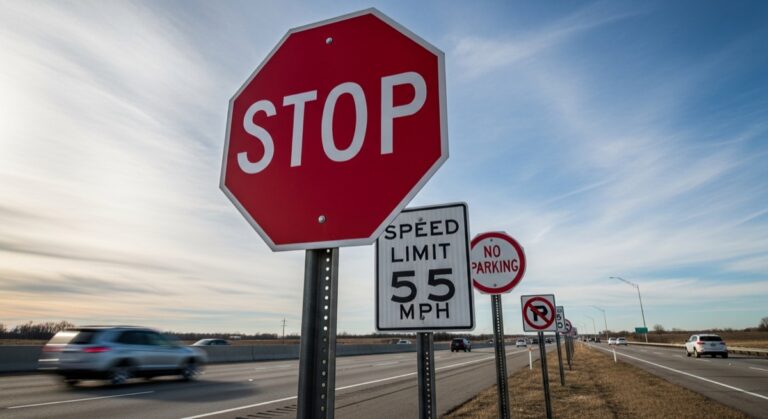
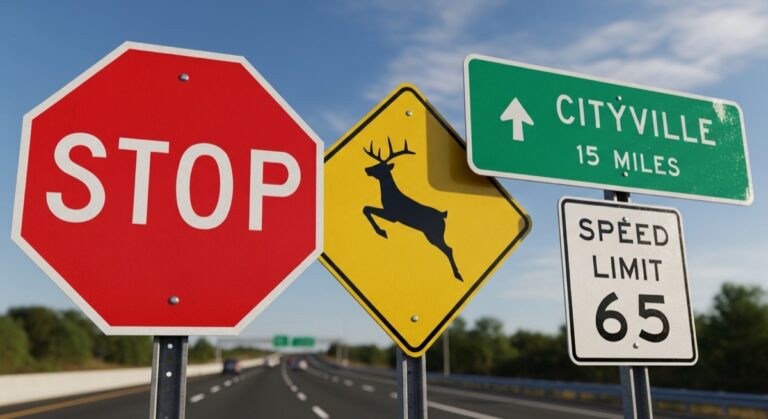
Red is reserved for the most critical regulatory messages. Per MUTCD Section 2A.13, red backgrounds or red legends are used on:
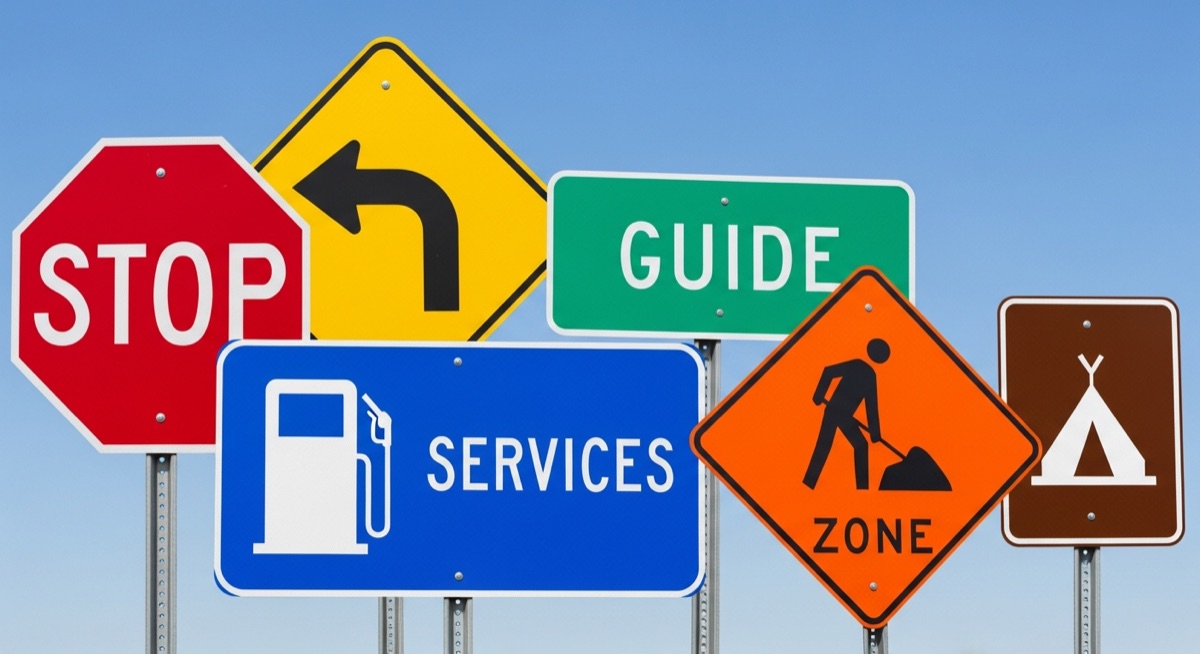
- STOP signs (R1-1) — white legend on red background
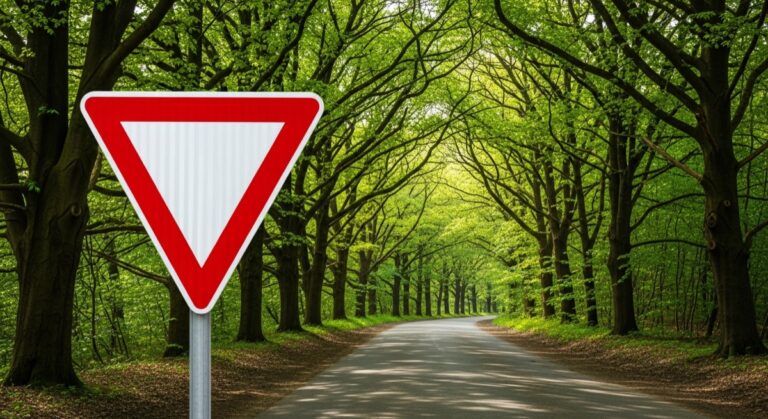
- YIELD signs (R1-2) — red border with white background
- DO NOT ENTER (R5-1) and WRONG WAY (R5-1a) signs
- Prohibition signs — red circle-and-slash symbol on white background (e.g., No U-Turn, No Left Turn)
- Interstate route markers — white legend on red and blue shield
Red always communicates that a driver must stop or that an action is prohibited. There is no optional or advisory use of red.
Yellow — General Warning
Yellow backgrounds indicate general warning conditions. Per Section 2C.02, yellow warning signs alert drivers to unexpected conditions that may require a reduction in speed or increased caution. Common examples include:
- Curve and turn warnings (W1 series)
- Intersection warnings (W2 series)
- Advance traffic control warnings (W3 series)
- Road condition warnings — narrow bridge, hill, dip (W5, W7, W8 series)
- Advisory speed plaques (W13-1P)
Yellow signs always use black legend and border. The diamond shape is the standard warning sign shape per Section 2C.04.
Orange — Temporary Traffic Control (Work Zones)
Orange is exclusively used for temporary traffic control in work zones. Defined in MUTCD Part 6, orange warning signs replace standard yellow warning signs within construction and maintenance zones. Examples include:
- ROAD WORK AHEAD (W20-1)
- DETOUR (M4-8)
- Lane closure warnings
- Flagger ahead warnings (W20-7)
Orange signs use black legend and border, just like yellow signs. The critical distinction is that orange signals temporary conditions, while yellow signals permanent conditions.
Green — Guide and Directional Information
Green backgrounds indicate directional guidance and distance information. Per Section 2D.01, green is used on:
- Destination signs on freeways and conventional roads
- Distance signs
- Street name signs (may also be other colors per local practice)
- Mile markers
- Bicycle route guide signs
Green signs use white legend and border.
Blue — Motorist Services
Blue backgrounds are reserved for motorist services information per Section 2H.01. These signs direct travelers to:
- Gas, food, lodging, and camping (general service signs, D9 series)
- Hospital (D9-2)
- Rest areas
- Tourist information
Blue signs use white legend and are typically found along freeways and expressways at interchange approaches.
Brown — Recreation and Cultural Interest
Brown backgrounds identify recreational and cultural points of interest per Section 2H.07. Uses include:
- State and national parks
- Historic sites
- Scenic areas
- Campgrounds, boat ramps, and trailheads
Brown signs use white legend and border.
Fluorescent Yellow-Green — Pedestrians, Bicycles, and Schools
Fluorescent yellow-green (FYG) provides enhanced conspicuity for vulnerable road user warnings. Per Section 2A.13, FYG backgrounds may be used on:
- Pedestrian warning signs (W11-2)
- Bicycle warning signs (W11-1)
- School area signs (S1, S2 series) — FYG is required for school warning signs per Section 7B.07 (see our school zone sign requirements guide)
The high-visibility color was specifically chosen because research shows it is more conspicuous than standard yellow during dawn, dusk, and overcast conditions.
Fluorescent Pink — Incident Management
Fluorescent pink is the newest MUTCD sign color, designated for incident management situations per Section 6I.01. It is used on temporary signs placed by emergency responders to manage traffic around crashes, hazardous spills, and other unplanned events. This color distinguishes incident management from planned work zones (orange).
White — Regulatory
White backgrounds with black legend are used for regulatory signs per Section 2B.01 — speed limits, turn restrictions, lane-use control, parking regulations, and similar enforceable messages. The exceptions within the regulatory family are STOP (red), YIELD (red/white), and ONE WAY (black background).
Quick Reference Table
| Color | Meaning | Legend Color | MUTCD Reference |
|---|---|---|---|
| Red | Stop / Prohibition | White | Section 2A.13 |
| Yellow | General Warning | Black | Section 2C.02 |
| Orange | Work Zone / Temporary | Black | Part 6 |
| Green | Guide / Directional | White | Section 2D.01 |
| Blue | Motorist Services | White | Section 2H.01 |
| Brown | Recreation / Cultural | White | Section 2H.07 |
| Fluorescent Yellow-Green | School / Pedestrian / Bicycle | Black | Section 7B.07 |
| Fluorescent Pink | Incident Management | Black | Section 6I.01 |
| White | Regulatory | Black | Section 2B.01 |
Maintaining correct sign colors is not just a best practice — it is a legal requirement. Non-standard colors can create driver confusion and expose agencies to tort liability. Always verify color specifications against the current edition of the MUTCD and use FHWA-certified sign materials that meet the color requirements of ASTM D4956 (see our guide to reflective sheeting types).