Reflective Sheeting Types for Traffic Signs — ASTM D4956 Explained
Every retroreflective traffic sign in the United States uses sheeting materials classified under ASTM D4956, Standard Specification for Retroreflective Sheeting for Traffic Signs. Understanding the different sheeting types — and how they relate to sign retroreflectivity requirements — — their performance characteristics, durability, and appropriate applications — is essential for sign fabricators, procurement officers, and traffic engineers responsible for specifying and maintaining compliant signs.
This guide explains the ASTM D4956 classification system and how it connects to MUTCD requirements. For 11th Edition compliance dates, see our dedicated guide.
How Retroreflective Sheeting Works
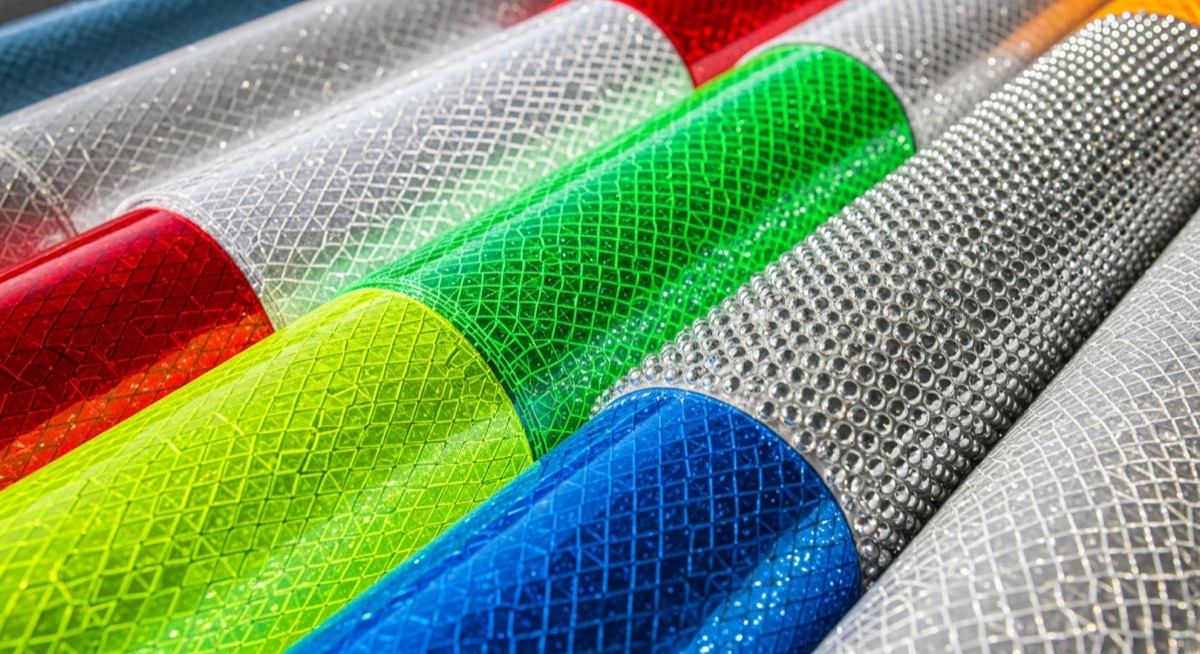
Retroreflective sheeting returns light back toward the source — in this case, a driver’s headlights. Unlike a mirror (which reflects at an equal but opposite angle), retroreflective materials use either glass beads or microprisms to redirect light back along the same path it arrived. This is what makes signs visible in headlights at night.
The two fundamental technologies are:
- Glass bead (enclosed lens or encapsulated lens) — glass microspheres embedded in or behind a transparent layer. Light enters the bead, refracts, reflects off the backing, and returns through the bead.
- Microprismatic (cube-corner) — tiny prisms molded into the sheeting that reflect light through total internal reflection. Significantly more efficient than glass bead technology.
ASTM D4956 Sheeting Types
ASTM D4956 classifies sheeting into multiple types. The most commonly used in traffic sign applications are:
Type I — Engineering Grade
- Technology: Enclosed-lens glass bead
- Typical warranty life: 7 years
- Performance: Lowest retroreflectivity of all types. Adequate for low-speed, supplemental signs.
- Common uses: Street name signs, parking signs, delineator posts, guide signs in well-lit urban areas.
- MUTCD note: Type I does not meet MUTCD minimum maintained retroreflectivity levels for many regulatory and warning sign applications. Its use on critical signs (STOP, curve warnings) is generally inadequate. See minimum retroreflectivity levels for thresholds.
Type III — High-Intensity Prismatic (HIP)
- Technology: Encapsulated glass bead or prismatic
- Typical warranty life: 10-12 years
- Performance: Approximately 2-3x the retroreflectivity of Type I. Good wide-angle performance.
- Common uses: Regulatory signs (STOP, YIELD, speed limit), warning signs, guide signs on conventional roads.
- MUTCD note: Type III is the de facto minimum standard for most regulatory and warning sign applications. Many agencies have adopted Type III as their minimum specification.
Type IV — High-Intensity Prismatic (HIP)
- Technology: Microprismatic (unmetallized)
- Typical warranty life: 10-12 years
- Performance: Similar or slightly higher than Type III. Good fluorescent color availability.
- Common uses: Construction zone signs, signs requiring fluorescent colors (FYG school signs, fluorescent orange work zone signs).
Type VIII — Flexible Prismatic
- Technology: Microprismatic
- Typical warranty life: 7-10 years
- Performance: High retroreflectivity with conformable (flexible) construction.
- Common uses: Signs on curved surfaces, roll-up signs for temporary traffic control, channelizing devices, delineators.
Type IX — Prismatic (Diamond Grade or equivalent)
- Technology: Full-cube microprismatic
- Typical warranty life: 12 years
- Performance: 3-4x the retroreflectivity of Type III. Excellent performance at wide observation angles (important for multi-lane roads).
- Common uses: Overhead guide signs, freeway signs, signs on unlighted high-speed roads, any application where maximum nighttime visibility is critical.
Type XI — Advanced Prismatic
- Technology: Full-cube or truncated-cube microprismatic
- Typical warranty life: 12+ years
- Performance: Highest retroreflectivity available. Outstanding wide-angle performance and uniformity.
- Common uses: Premium applications where agencies want maximum visibility — STOP signs at high-crash intersections, curve warnings, overhead signs, guide signs on dark freeways.
MUTCD Minimum Sheeting Requirements
The MUTCD does not directly specify which ASTM D4956 type to use on which sign. Instead, it establishes minimum maintained retroreflectivity levels in Table 2A-3 (see Section 2A.22). The practical effect is:
| Sign Application | Minimum Practical Sheeting Type | Reason |
|---|---|---|
| STOP signs (R1-1) | Type III or higher | White-on-red requires high white retroreflectivity to remain legible |
| Warning signs (yellow background) | Type III or higher | Must maintain 50 cd/lx/m² yellow background |
| Speed limit signs | Type III or higher | Must maintain 50 cd/lx/m² white background |
| Guide signs (white on green) | Type III (ground-mounted), Type IX+ (overhead) | Overhead signs need higher initial retroreflectivity due to distance and angle |
| Street name signs | Type I acceptable (low speed, illuminated areas) | Lower criticality, often supplemented by lighting |
| School signs (FYG) | Type IV or higher | Fluorescent yellow-green requires prismatic sheeting for FYG color |
Cost vs. Performance Considerations
While higher-type sheeting costs more per square foot, the total lifecycle cost often favors premium materials:
- Type I sheeting may cost $0.50-$1.00/sq ft but lasts 7 years.
- Type IX sheeting may cost $2.50-$4.00/sq ft but lasts 12+ years and maintains retroreflectivity far above minimum levels throughout its life.
- Labor and equipment costs for sign replacement are the same regardless of sheeting type — so the material cost difference is a small fraction of total replacement cost.
Many agencies have adopted a policy of using Type IX or Type XI sheeting as the default for all sign types. The higher initial retroreflectivity provides a larger margin above minimum maintained levels, extending effective sign life and reducing replacement frequency.
Procurement Tips
- Always specify the ASTM D4956 type in bid documents — do not use brand names.
- Require a certificate of conformance from the sheeting manufacturer with every shipment.
- Store sheeting properly — heat and UV exposure during storage can degrade performance before the sheeting is even applied to a sign.
- Record the sheeting type and manufacturer lot number for every sign fabricated — this supports your retroreflectivity management program.
Understanding ASTM D4956 sheeting types is fundamental to traffic sign management. Specifying the right sheeting for each application ensures that signs remain visible and MUTCD-compliant throughout their service life, keeping drivers safe and protecting your agency from liability.