MUTCD Part 2: Signs — Complete Reference Guide
Part 2 of the MUTCD is the largest and most frequently referenced section of the manual. It covers every aspect of highway signing — from regulatory signs like STOP and SPEED LIMIT to warning signs, guide signs, freeway signs, toll road signs, and specialty signs. With chapters spanning 2A through 2N, Part 2 is the essential reference for anyone involved in sign design, placement, or maintenance.
What Part 2 Covers
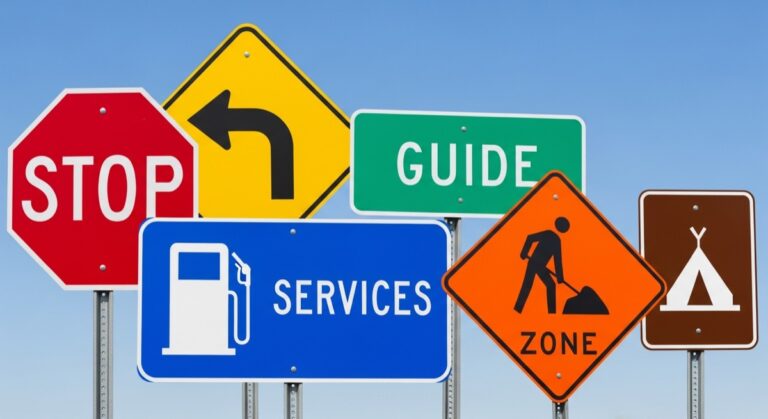
Part 2 — Signs — establishes the standards for all roadway signs, including their design (colors, shapes, sizes, symbols, text), placement (mounting height, lateral offset, spacing), retroreflectivity, and application conditions. It organizes signs into functional categories: regulatory, warning, and guide signs, plus specialty categories for toll roads, managed lanes, services, and changeable message signs.
Key Chapters in Part 2
- Chapter 2A — General: Covers sign design fundamentals including standard colors, shapes, sizes, fonts (Clearview and Standard Highway Alphabets), retroreflectivity requirements, illumination, and placement criteria. Contains the foundational tables for minimum sign sizes (Table 2A-1).
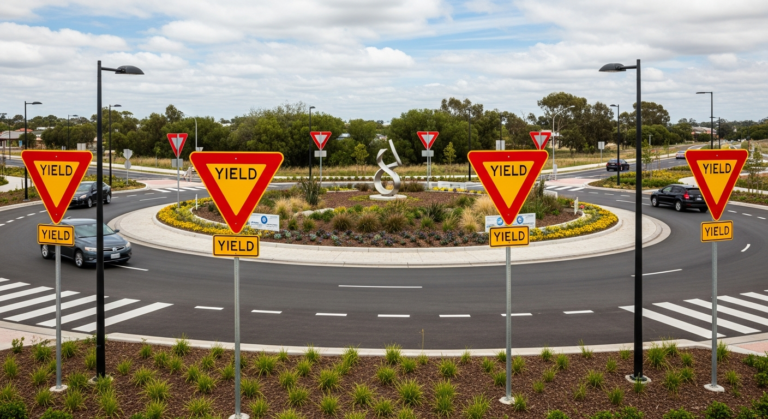
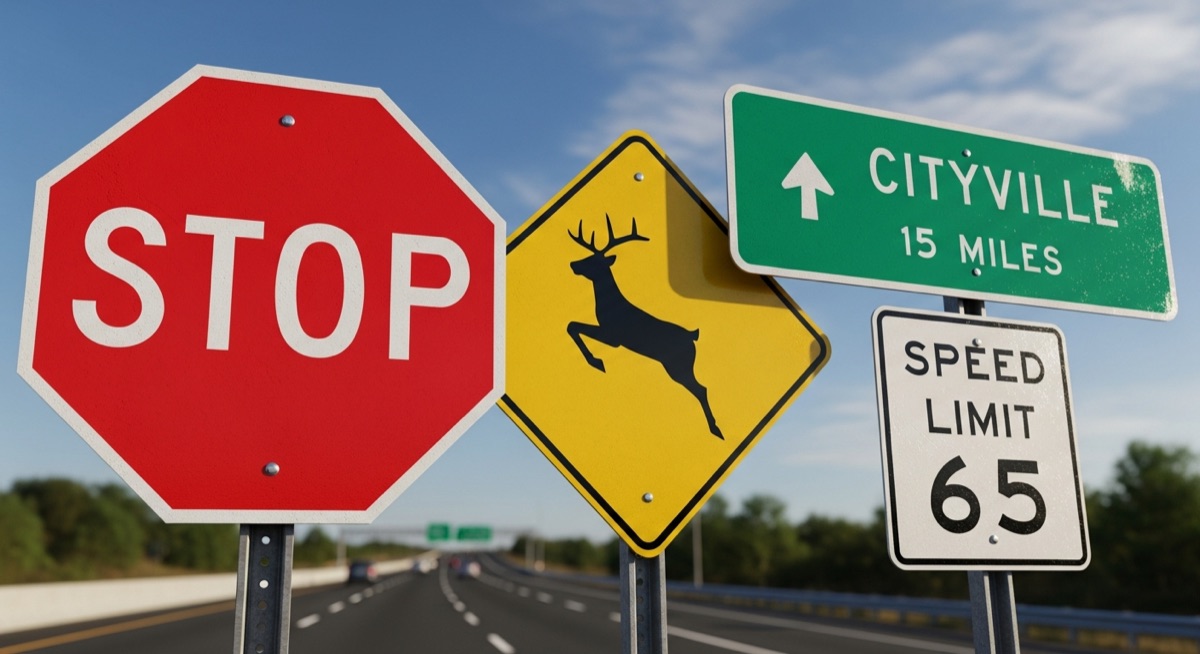
- Chapter 2B — Regulatory Signs, Barricades, and Gates: The workhorse chapter covering STOP signs (R1-1), YIELD signs (R1-2), speed limit signs (R2-1), turn prohibition signs, lane-use control signs, parking signs, pedestrian and bicycle regulatory signs, and road closure barricades. Includes multi-way stop warrants and all-way yield criteria.
- Chapter 2C — Warning Signs and Object Markers: Covers all diamond-shaped yellow/fluorescent yellow-green warning signs, including curve and turn warnings, intersection warnings, advance grade crossing warnings, pedestrian/bicycle warnings, and object markers (Types 1, 2, and 3). Includes advisory speed plaques.
- Chapter 2D — Guide Signs — Conventional Roads: Addresses route markers (Interstate, U.S., State), destination signs, distance signs, street name signs, and enhanced reference location signs for conventional roads.
- Chapter 2E — Guide Signs — Freeways and Expressways: Covers freeway and expressway guide signing including advance guide signs, exit direction signs, gore signs, interchange sequence signing, and post-interchange distance signs.
- Chapter 2F — Toll Road Signs: Specific standards for toll facility signing, including toll plaza advance signs, ETC (electronic toll collection) lane signs, and toll rate signs.
- Chapter 2G — Preferential and Managed Lane Signs: Covers HOV lane signs, express/managed lane signs, bus-only lane signs, and related preferential lane signing.
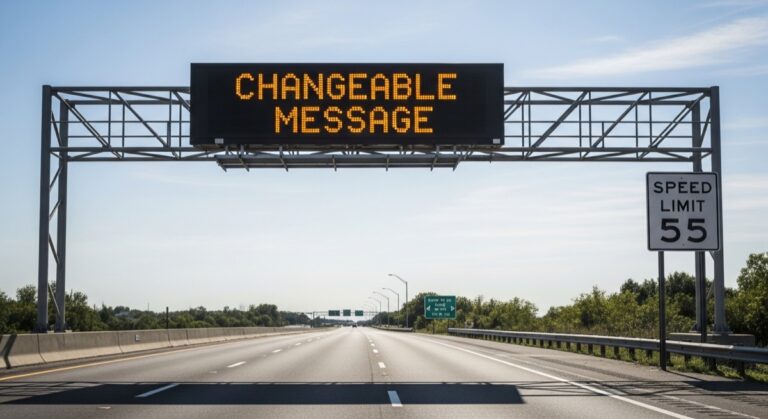
- Chapters 2H through 2N: These chapters cover General Information Signs (2H), General Service Signs (2I), Specific Service Signs/Logo Signs (2J), Tourist-Oriented Directional Signs (2K), Changeable Message Signs (2L), Recreational and Cultural Interest Area Signs (2M), and Emergency Management Signs (2N).
Critical Standards (SHALL Requirements)
Part 2 contains hundreds of mandatory standards. The most critical include:
- Section 2A.04 — Standardization of Application: Signs SHALL be used only as prescribed in the MUTCD. Non-standard signs SHALL NOT be used on any road open to public travel.
- Section 2A.06 — Sign Design: Signs SHALL use the standard shapes, colors, and legends specified in the MUTCD. Custom messages SHALL follow the format and design principles established in the manual.
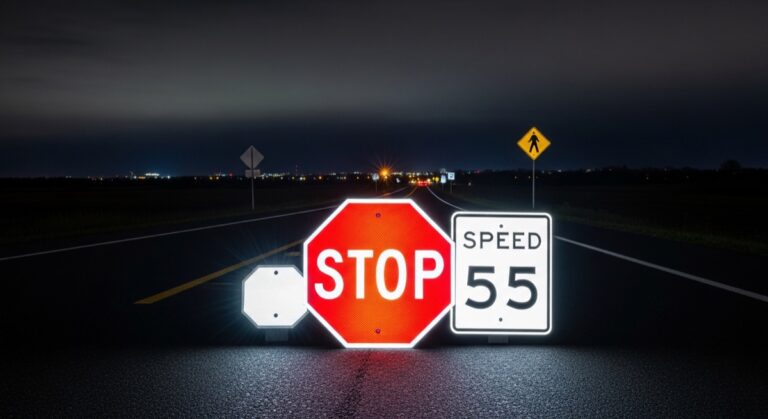
- Section 2A.07 — Retroreflectivity: Signs SHALL be retroreflective or illuminated to show the same shape and color both day and night. Agencies SHALL use an assessment or management method to maintain minimum retroreflectivity levels per Table 2A-3.
- Section 2A.08 — Sign Size: Sign sizes SHALL meet the minimum dimensions specified in Table 2A-1 for the applicable road type.
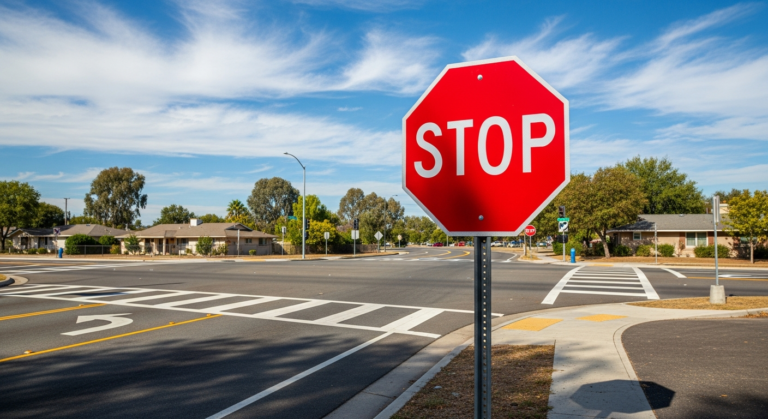
- Section 2B.04 — STOP Sign (R1-1): STOP signs SHALL be installed at intersections where engineering judgment determines a full stop is necessary. The STOP sign SHALL be the standard octagonal shape, red with white legend, minimum 30 inches (750 mm) for conventional roads and 36 inches (900 mm) for multi-lane roads.
- Section 2B.06 — YIELD Sign (R1-2): YIELD signs SHALL be the equilateral triangle shape (point down), red and white.
- Section 2B.13 — Speed Limit Sign (R2-1): Speed limit signs SHALL be posted on all roadways where the speed limit has been established by law or engineering study.
- Section 2B.05 — Multi-Way Stop Warrants: Multi-way STOP control SHALL be considered only when specific warrants are met, including minimum traffic volumes and crash history criteria.
- Section 2C.02 — Warning Sign Design: Warning signs SHALL be diamond-shaped, with black legend and border on a yellow or fluorescent yellow-green background (the latter for pedestrian, bicycle, and school signs).
Key Guidance (SHOULD Items)
- Sign placement SHOULD provide adequate visibility distance based on the 85th-percentile approach speed.
- Oversized signs SHOULD be used where higher speeds, complex decisions, or limited visibility warrant additional conspicuity.
- Street name signs SHOULD be retroreflective, with a minimum letter height of 6 inches (150 mm) on major roads and 4 inches (100 mm) on minor roads.
- Post-mounted signs SHOULD have a minimum mounting height of 7 feet (2.1 m) in urban areas and 5 feet (1.5 m) in rural areas, measured from the bottom of the sign to the roadway edge.
- Fluorescent yellow-green background SHOULD be used for warning signs related to pedestrians, bicyclists, and schools.
Critical Data Tables
Standard Sign Colors and Meanings
| Color | Application |
|---|---|
| Red | Stop, yield, prohibition, Do Not Enter, Wrong Way |
| White | Regulatory signs (white background with black/red legend) |
| Yellow | Warning signs — general hazards, advisory speed |
| Fluorescent Yellow-Green | Warning signs for pedestrians, bicyclists, school zones |
| Orange | Temporary traffic control / work zone signs |
| Green | Guide signs — directional, distance, destination |
| Blue | Service signs — motorist services, general information |
| Brown | Recreational and cultural interest area signs |
| Purple | Managed lanes, toll facilities (ETC/E-ZPass) |
| Black | One-way signs, night speed limit signs, various regulatory sign legends |
Minimum Sign Sizes — Common Signs (from Table 2A-1)
| Sign | Single-Lane Conventional Road | Multi-Lane Conventional Road | Freeway |
|---|---|---|---|
| STOP (R1-1) | 30″ x 30″ | 36″ x 36″ | — |
| YIELD (R1-2) | 30″ x 30″ x 30″ | 36″ x 36″ x 36″ | — |
| Speed Limit (R2-1) | 24″ x 30″ | 30″ x 36″ | 36″ x 48″ |
| Warning (diamond) | 30″ x 30″ | 36″ x 36″ | 48″ x 48″ |
| Do Not Enter (R5-1) | 30″ x 30″ | 36″ x 36″ | 36″ x 36″ |
| Wrong Way (R5-1a) | 24″ x 18″ | 36″ x 24″ | 36″ x 24″ |
Minimum Maintained Retroreflectivity Levels (from Table 2A-3)
| Sign Color | Sheeting Type | Minimum Retroreflectivity (cd/lx/m2) |
|---|---|---|
| White on Green (Guide) | ASTM Type III or higher | White: 25 / Green: 7 |
| White on Red (Regulatory) | ASTM Type III or higher | White: 35 / Red: 7 |
| Black on Yellow (Warning) | ASTM Type III or higher | Yellow: 50 |
| Black on Orange (Work Zone) | ASTM Type III or higher | Orange: 50 |
Note: These are representative values. Consult Table 2A-3 in the full MUTCD for the complete retroreflectivity requirements by sign type, size, and sheeting material.
Compliance Dates
Key compliance timelines related to Part 2 include:
- Sign retroreflectivity management: Agencies must have a method in place to maintain minimum retroreflectivity. The 11th Edition maintains the requirements established in earlier amendments to the 2009 Edition.
- Street name sign letter height: Agencies have compliance deadlines for meeting the minimum 6-inch (upper case) / 4.5-inch (lower case) letter heights on all street name signs. Specific dates depend on when the sign is replaced.
- New installations: All new sign installations after the effective date (January 18, 2024) SHALL comply with the 11th Edition.
What Changed in the 11th Edition
Part 2 received substantial updates in the 11th Edition:
- New sign designs: Dozens of new standard signs were added, including signs for managed lanes, roundabouts, bicycle facilities, and pedestrian hybrid beacons.
- Purple for managed lanes/tolling: Purple was elevated as a standard color for electronic toll collection and managed lane signing.
- Roundabout signing: Significantly expanded guidance for signing at roundabouts, including multi-lane roundabouts with lane-use signing.
- Fluorescent yellow-green expansion: Expanded use of fluorescent yellow-green for pedestrian and bicycle warning signs.
- Changeable Message Signs (Chapter 2L): Updated standards for CMS/DMS, including readability requirements and restrictions on message content.
- Accessible Pedestrian Signals integration: Better integration with pedestrian-focused signing.
- Speed limit sign placement: Enhanced requirements for speed limit sign placement and speed feedback signs.
- Wrong-Way driving countermeasures: New provisions for enhanced wrong-way signing at interchange ramps, including sign size increases and supplemental signs.
- Low-volume road content: Content previously in the standalone Part 5 (Low-Volume Roads) from the 2009 Edition has been integrated into Part 2 and other Parts, with appropriate sign size and application modifications for low-volume conditions.
Related Resources on mutcd.info
- Part 1: General Provisions — Reference Guide
- Part 3: Markings — Complete Reference Guide
- Sign Retroreflectivity Requirements Explained
- STOP Sign Warrants and Installation Criteria
- Speed Limit Signs: Standards and Placement
- Work Zone Signs — See Part 6
- School Zone Signs — See Part 7
For the complete text of Part 2, visit the official FHWA MUTCD at mutcd.fhwa.dot.gov. Individual chapter PDFs are available: Chapter 2A, Chapter 2B, Chapter 2C, Chapter 2D, Chapter 2E, Chapter 2F, Chapter 2G, Chapters 2H-2N.